Empowering Healthcare with Generative AI
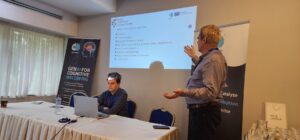
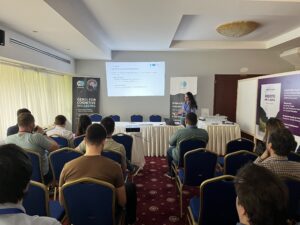
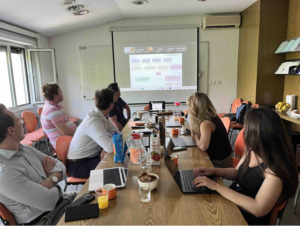
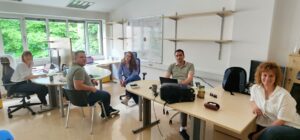
In its first year, the ChatMED project took significant strides toward bridging the knowledge gap in Generative AI within the healthcare sector. Hosted by the Faculty of Computer Science and Engineering (FCSE) in Skopje, North Macedonia, the project organized two comprehensive training sessions designed to equip researchers and medical practitioners with cutting-edge skills.
The training program was split into two key events: “ChatMED Opportunities and GenAI Fundamentals” held in April 2025, and “AI in Neurology” in July 2025. Here is a look at the transformative insights shared during these sessions.
Session 1: Foundations and Industry Collaboration
The inaugural session set the stage by introducing the fundamental principles of Generative AI and exploring its integration into national health strategies.
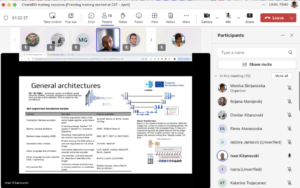
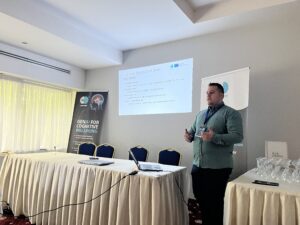
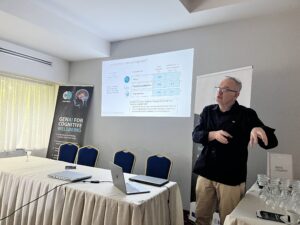
- The AI Landscape: Prof. Dimitar Trajanov provided a deep dive into current GenAI trends, explaining the shift from standard models to autonomous AI agents and the “Agent2Agent” communication protocols that allow them to solve complex workflows.
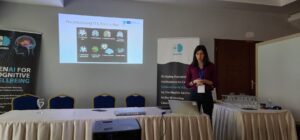
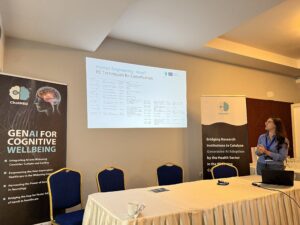
- Prompt Engineering: In a hands-on workshop, asst. Ana Todorovska demonstrated how “prompt engineering” is becoming a critical skill for clinicians. She showcased how structured frameworks can refine Large Language Model outputs to ensure they are safe and accurate for medical use.
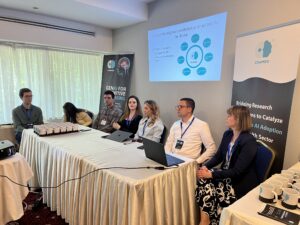
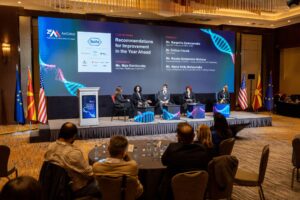
- Industry & Infrastructure: The event also featured a robust industry panel with representatives from Sorsix, Ekonet, RLDatix, Axians and iReason, discussing how ChatMED could integrate with existing national health systems and to scale internationally. Concurrently, the scientific committee unveiled the project’s massive HPC infrastructure which has already powered the development of “VezilkaLLM,” the first Macedonian language LLM.
Session 2: Neurology and Advanced Imaging
The second session moved from theory to specialized application, focusing heavily on neurology and diagnostics.
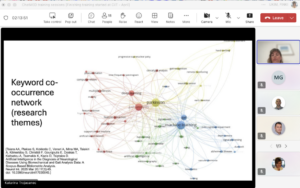
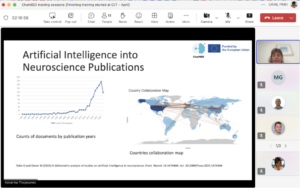
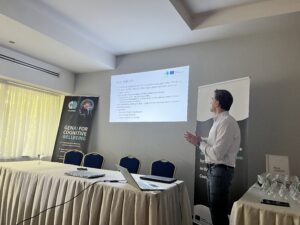
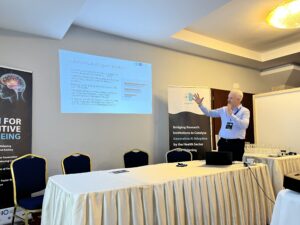
- Predictive AI for Neurology: Prof. Katarina Trojachanec Dineva explored the power of AI in diagnosing complex conditions like Alzheimer’s, Parkinson’s, and stroke. She highlighted how integrating multimodal data allows AI to detect disease patterns years before clinical symptoms appear. She also emphasized the critical need for explainable AI (XAI) to build trust with clinicians.
- Medical Imaging: Prof. Ivan Kitanovski led a practical exploration of AI in radiology. He compared MRI and CT modalities and performed a live demo using a UNet model for real-time brain tumor segmentation.
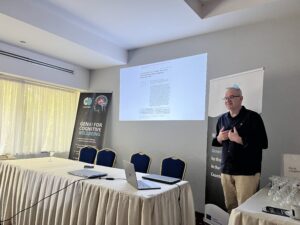
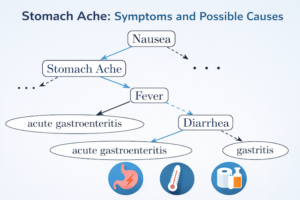
- GraphRAG Technology: Addressing the issue of AI “hallucinations,” asst. Jovana Dobreva introduced GraphRAG. Unlike standard retrieval methods, this approach uses knowledge graphs to link medical entities (like genes and diseases), allowing the AI to “reason” through relationships rather than just matching keywords.
- Domain-Driven Design: Prof. Riste Stojanov emphasized that building medical AI requires a “Ubiquitous Language” – a shared vocabulary between developers and doctors to ensure that AI agents operate within clearly defined “Bounded Contexts” for safety and reliability.