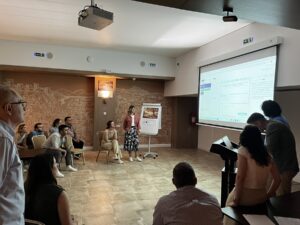
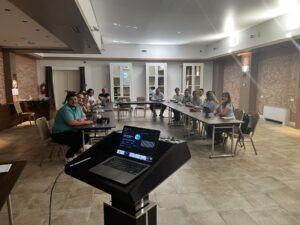
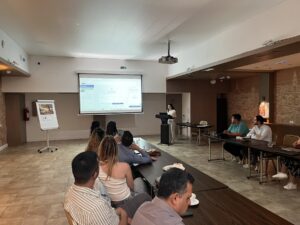
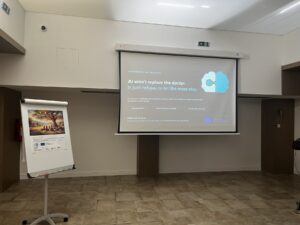
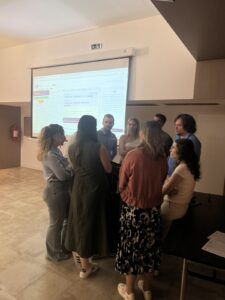
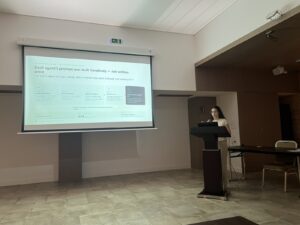
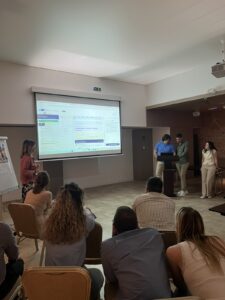
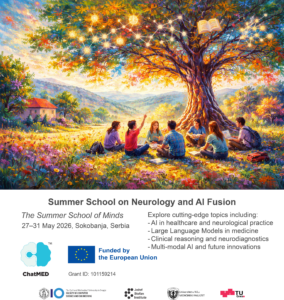
From 27 to 31 May 2026, the ChatMED project held its second summer school in Sokobanja, Serbia, under the theme “Neurology and AI Fusion.” The event brought together participants from medicine, computer science, engineering and AI research with one central goal: to build a common understanding of how artificial intelligence can meaningfully support neurological care.
The summer school was designed not as a traditional training course, but as an interdisciplinary bridge. For computer scientists, the objective was not to become neurologists. For clinicians, the objective was not to become AI engineers. Instead, the week focused on a more important question: how can both communities learn to define clinical problems together, understand the limitations of data, and design AI tools that truly help patients and clinicians?
From clinical reasoning to AI-ready problems
The programme started with an introduction to the ChatMED project and its broader mission: strengthening research excellence in Widening countries, advancing healthcare-centric generative AI, and promoting cross-border collaboration between North Macedonia, Serbia, Slovenia and Austria.
A key message shaped the entire week: in medicine, “it works in the lab” does not automatically mean “it is safe for the patient.” This distinction is particularly important in neurology, where patient narratives are often subjective, symptoms are difficult to classify, diagnostic data are incomplete, and the meaning of a signal depends heavily on clinical context.
Participants were introduced to the foundations of clinical neurology, with a focus on how neurologists transform patient complaints into structured clinical problems. They explored the logic behind neurological examination, localization reasoning, differential diagnosis and rational diagnostic testing. One of the central lessons was that neurological reasoning begins with the question: “Where is the lesion?” Only after this step can a clinician meaningfully interpret symptoms, signs, tests and possible diagnoses.
This provided a strong basis for AI researchers to understand why a useful technical system must support a real clinical question, not merely classify text, images or signals.
Understanding diagnostic data: from waveforms to workflows
A major part of the summer school focused on diagnostic methods in neurology, especially electrodiagnostic studies such as EMG and nerve conduction studies. Participants learned that EDx is not simply a technical test, but an extension of the neurological examination. It helps clinicians localize disease, characterize mechanisms, distinguish between different neuromuscular disorders and follow changes over time.
The lectures demonstrated how LLMs could support neuromuscular care by summarizing long clinical notes, comparing changes across visits, identifying missing information, drafting referrals and producing patient-friendly explanations. However, the discussions also strongly emphasized safety: AI should not replace clinician responsibility. Purpose-directed LLM systems, embedded in supervised workflows, are more appropriate than generic chatbots, and no autonomous sign-off should be allowed in clinical decision-making.
This message was repeated across several sessions: AI can support interpretation, structure information and reduce burden, but the clinician remains responsible for verifying, editing and signing off.
Neurological diseases as real-world AI challenges
The summer school also introduced participants to several major neurological conditions and syndromes, including epilepsy, stroke, migraine, Alzheimer’s disease and movement disorders.
In epilepsy, participants learned why seizures are clinical, longitudinal and multimodal events. Epilepsy is not merely an EEG classification problem. Diagnosis requires integration of semiology, witness history, EEG, MRI, medication response and the longitudinal course of the disease. This opened discussion on how AI could assist with seizure detection, video analysis, wearable data, seizure diaries, longitudinal summaries and patient monitoring.
In stroke, the sessions highlighted the importance of rapid recognition, urgent action and structured clinical pathways. Participants were reminded that stroke is a medical emergency, where time directly influences outcomes. The discussion also showed how AI systems must be carefully aligned with clinical urgency, workflow timing and patient safety.
The sessions on headache and migraine illustrated another important challenge: not every symptom requires more data, more imaging or more automation. Clinical context, red flags and rational testing are essential. AI should help reduce inappropriate testing and overinterpretation, not amplify them.
The Alzheimer’s disease lecture introduced molecular biomarkers and their growing role in early diagnosis, patient stratification and eligibility for anti-amyloid therapies. This topic showed the increasing importance of quantitative, multimodal and biomarker-driven approaches in modern neurology, while also emphasizing that interpretation remains clinically complex.
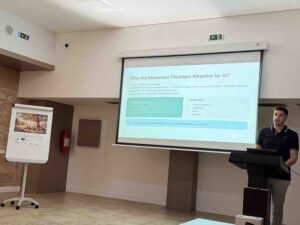
Movement disorders provided one of the clearest examples of the potential for AI. Conditions such as Parkinson’s disease are clinically observable, but also measurable through video, sensors, gait analysis and digital biomarkers. The message was simple but powerful: the neurologist gives meaning to movement, while AI can help measure it. Together, they can create new opportunities for monitoring, quantification and longitudinal care.
What AI really changes for the doctor
A dedicated session also addressed one of the most important questions for clinical adoption: what does AI actually mean for the doctor? The discussion challenged two common misconceptions — the engineer’s claim that “AI will replace the doctor” and the doctor’s fear that “a smarter rival has arrived.” Instead, the session positioned AI as a clinical support tool that exposes problems healthcare systems have carried for years: fragmented documentation, missing context, variable reports, administrative burden, lack of standardisation and communication gaps between doctors, systems and patients. Participants explored how AI can support daily clinical work through speech-to-text documentation, clinical note structuring, autocomplete, summarisation, patient-friendly explanations and AI-augmented reports. At the same time, the message remained clear: AI does not remove responsibility from the doctor. It can help prepare, structure and explain information, but clinical judgement, verification and accountability remain human tasks.
Data, regulation and clinician responsibility
The summer school also addressed a topic that is becoming unavoidable in healthcare AI: regulation. The ChatMED perspective on GDPR, NIS2, the AI Act and the European Health Data Space emphasized that regulation is not somebody else’s problem. Clinicians do not need to become lawyers, but they must understand the basics of data quality, provenance, representativeness, consent, accountability and patient rights.
The discussion stressed that every AI-assisted clinical record still carries clinical responsibility. If a doctor signs the note, chooses the tool, handles the data and explains decisions to the patient, then the doctor must understand the conditions under which AI can be trusted.
This perspective connected directly to the wider ChatMED mission: building not only AI tools, but also the knowledge, governance and institutional capacity needed to use them responsibly.
ChatMED in vivo: from methodology to platform
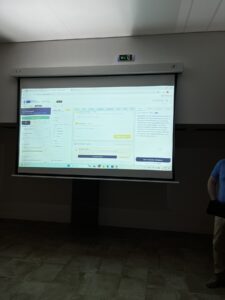
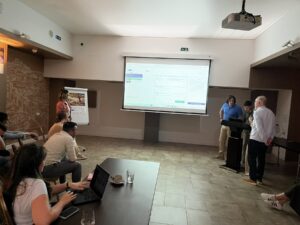
One of the key outcomes of the summer school was the live demonstration of the ChatMED project interface, NeuroOrch. The demonstration showed how the project has moved from methodology to a working prototype that clinicians can open, query and evaluate.
The NeuroOrch interface reflects the clinical reasoning process developed within ChatMED. It is not an off-the-shelf LLM solution, but a structured orchestration pipeline shaped through collaboration between clinicians and engineers. The system mirrors parts of neurological reasoning and supports evaluation through expert rating workflows.
The demonstration also opened discussion on the next stages of ChatMED: pilot evaluation, full expert review, specialized multi-agent systems, and future modules for bioinformatics, biochemical data, neuroimaging and EEG.
This was an important milestone for the project because it showed that ChatMED is progressing from conceptual work toward practical, evaluable tools for clinical AI research.
Key outcomes of the Summer School
The second ChatMED Summer School achieved several important outcomes.
First, it created a shared language between clinicians and AI researchers. Participants learned how neurological problems are defined, measured, monitored and translated into technical solutions.
Second, it strengthened understanding of clinical reasoning. The programme showed why symptoms are not diagnoses, why diagnostic tests change probabilities rather than create absolute truth, and why clinical context is essential for safe AI development.
Third, it identified realistic roles for AI and LLMs in neurology. These include structuring narratives, summarizing longitudinal data, supporting diagnostic workflows, assisting with reporting, detecting missing information, contextualizing results and enabling patient-friendly communication.
Fourth, it reinforced the importance of human oversight. Across all sessions, the same principle was clear: AI can support clinical work, but it must not remove clinical responsibility.
Fifth, the event enabled hands-on engagement with the ChatMED NeuroOrch prototype, creating a direct connection between theoretical training and the project’s technical development.
Finally, the summer school strengthened interdisciplinary collaboration and opened new pathways for future publications, pilot studies, clinical evaluation and project proposals.
Looking ahead
The Sokobanja summer school confirmed that the future of AI in healthcare will not be built by technology alone. It will be built through collaboration between those who understand the patient, those who understand the data, and those who can translate both into safe, useful and responsible systems.
For ChatMED, Summer School 2 marked an important step forward. It showed that the project is not only transferring knowledge, but also creating a new working culture: one in which clinicians and engineers define problems together, evaluate tools together and share responsibility for the future of AI-supported healthcare.
The main message from Sokobanja can be summarized simply: Good AI in medicine does not begin with an algorithm. It begins with the right clinical question.